 1 day ago
5
1 day ago
5
.jpeg)
.jpg)
AI tools have become one of the most competitive software categories, and affiliate programs have followed the trend. Today, everything from writing assistants and coding copilots to AI-powered design platforms offers partners the opportunity to earn commissions by referring new users.
At first glance, these programs look similar to any other affiliate offer. Many advertise attractive commission rates, free trials, and recurring payouts that promise long-term income.
Most AI products are built as SaaS businesses, which means affiliates aren’t simply promoting a product but acquiring subscribers. This means whether a campaign becomes profitable often depends on how many users keep paying after the trial period ends.
According to Andreessen Horowitz (2025), AI products experience an unusually large wave of early users who sign up, experiment, and quickly churn – a phenomenon the firm calls ‘AI tourists’. Naturally, affiliate programs have followed the same trajectory, offering attractive recurring commissions and positioning AI as one of the hottest verticals of 2026.
This article explores how AI affiliate programs work, how they differ from traditional CPA offers, and what traffic buyers should consider before investing in this rapidly growing niche.
Why AI SaaS Affiliate Programs Work Differently
First things first.
AI affiliate programs aren’t reinventing affiliate marketing.
RevShare, recurring commissions, and long-term customer value already exist in verticals like iGaming, Social, and other subscription-based services.
Many tools offer a free trial or freemium plan before asking users to subscribe. For an affiliate, a registration may therefore be only the first step. The user still needs to test the product, see enough value to pay for it, and, in recurring commission programs, keep the subscription active.
This makes the path from click to revenue longer:
The AI SaaS Customer Journey
👆
Ad Click
User discovers your offer
→
🌐
Landing Page
Learns about the AI product
→
🆓
Free Trial
Tests the product
→
💳
First Payment
First affiliate commission
↓
🔄
Monthly Renewals
Customer keeps subscribing
→
💰
Recurring Revenue
Long-term affiliate earnings
A recent study by Torquato, Alves de Melo, Mendonça Peixoto et al. (2026) on subscription-based software consistently identifies customer lifecycle management as one of the primary drivers of sustainable growth. This is especially true for SaaS companies, whose business depends on predictable, ongoing revenue.
Here is where AI adds a challenge: switching is often easy.
A user can test several writing assistants, image generators, or productivity tools in the same week, then pay only for the one they find most useful. All of these factors drive the competition levels very high because the customer is most likely to ask:
“Why pay a subscription fee when you can turn to a competitor’s service and have another free trial?”
Traditional Affiliate Funnel vs AI SaaS Affiliate Funnel
Traditional Affiliate
👆 Click
↓
💳 Purchase
↓
💰 One-Time Commission
↓
Done
VS
AI SaaS Affiliate
👆 Click
↓
🆓 Free Trial
↓
💳 First Subscription Payment
↓
🔄 Monthly Renewals
↓
💸 Recurring Commission
Unlike traditional CPA offers, AI SaaS affiliate programs generate value throughout the customer’s subscription lifecycle rather than from a single conversion.
Examples of AI SaaS Affiliate Programs
Theory is one thing, but what do AI SaaS affiliate programs actually look like in practice?
While commission structures vary, many follow a similar model: affiliates earn a percentage of the customer’s subscription revenue for a limited period (often 12 months). Some programs combine recurring commissions with fixed bonuses, while others pay a one-time bounty for qualified sign-ups.
Here are a few examples:
Jasper
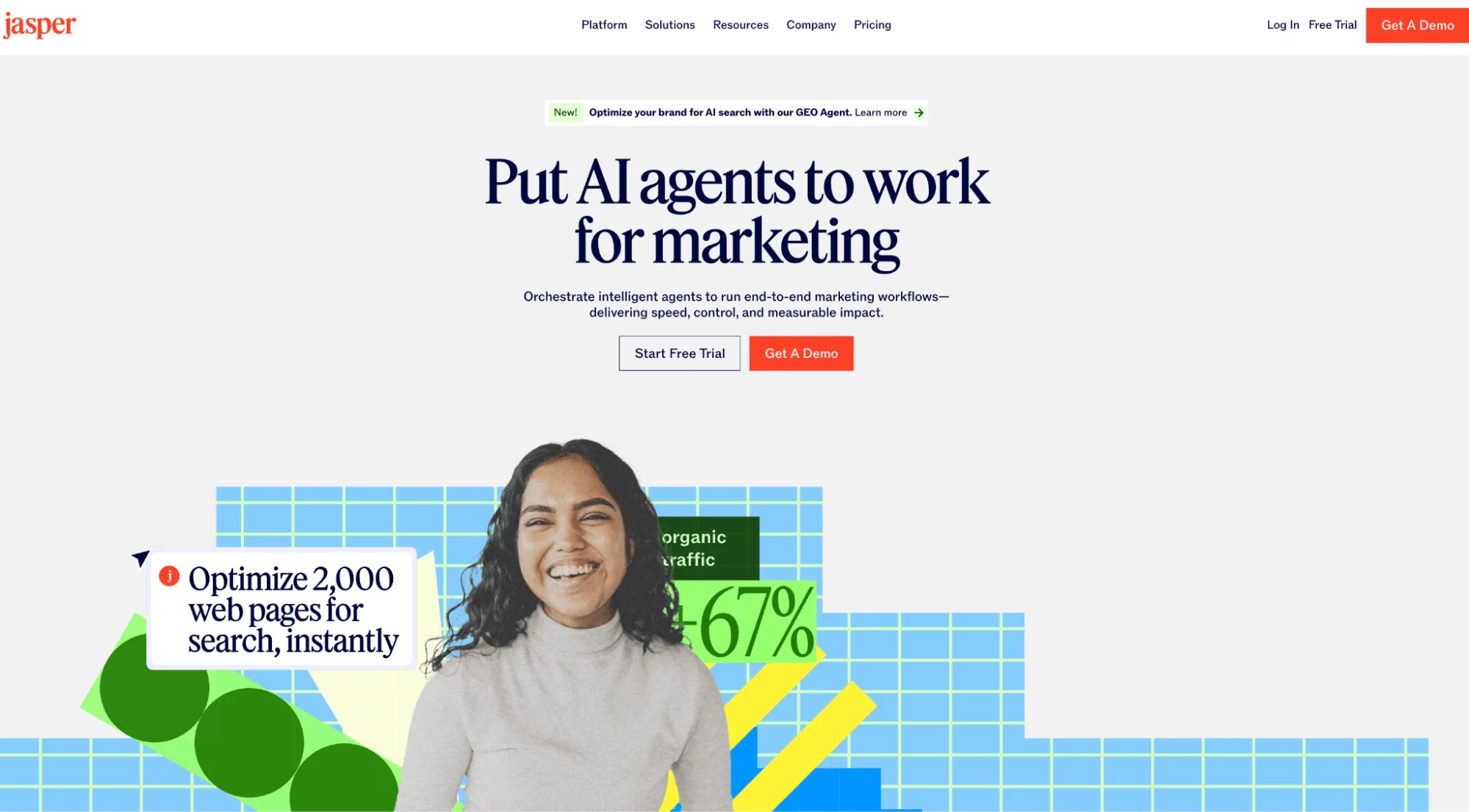
Jasper is one of the best-known AI writing assistants and offers a straightforward recurring commission model for affiliates.
- Commission: 25% recurring for up to 12 months (30% for top-performing partners)
- Cookie: Managed through the affiliate platform
- Best for: Content creators, bloggers, and B2B SaaS audiences
ElevenLabs
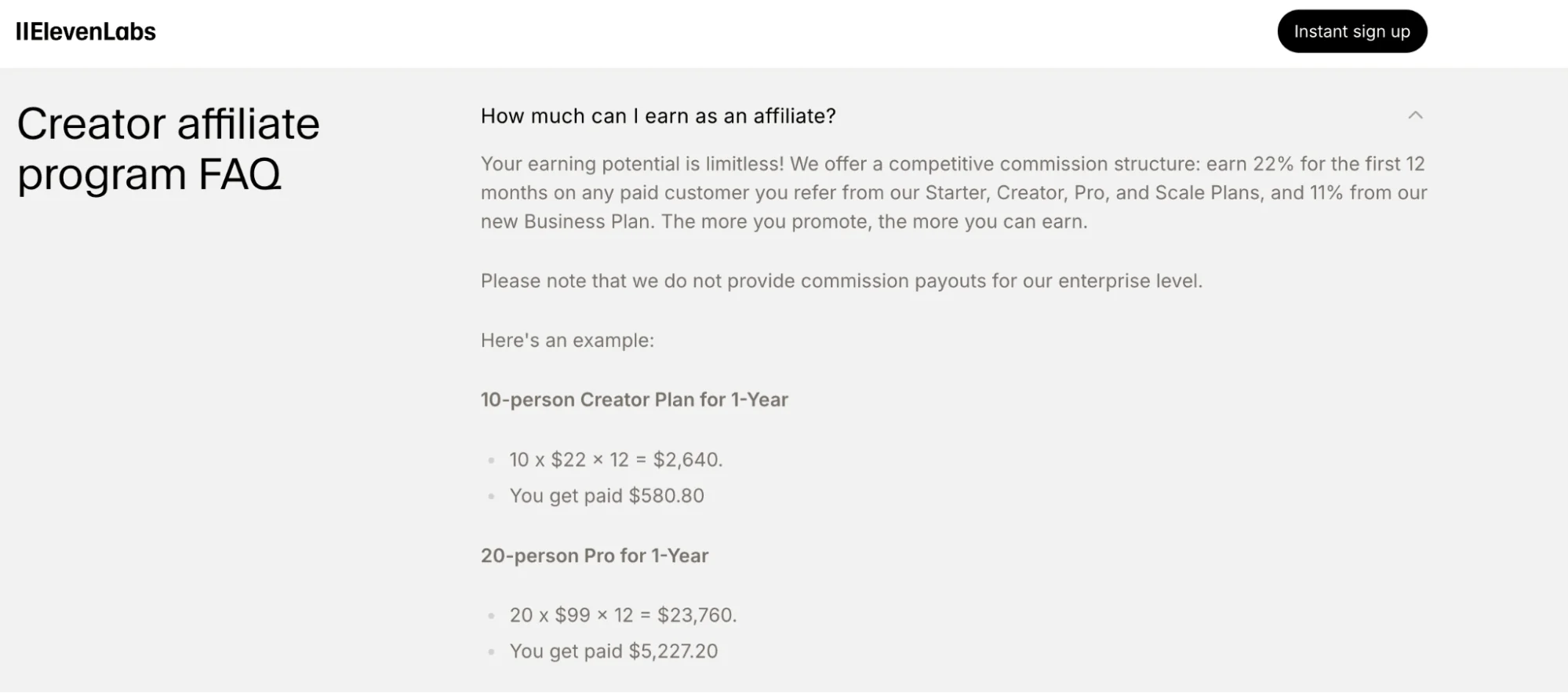
ElevenLabs focuses on AI voice generation and pays affiliates recurring commissions for the first year of a customer’s subscription.
- Commission: 22% recurring for the first 12 months
- Cookie: Not publicly specified
- Best for: AI creators, developers, and content production audiences
Writesonic
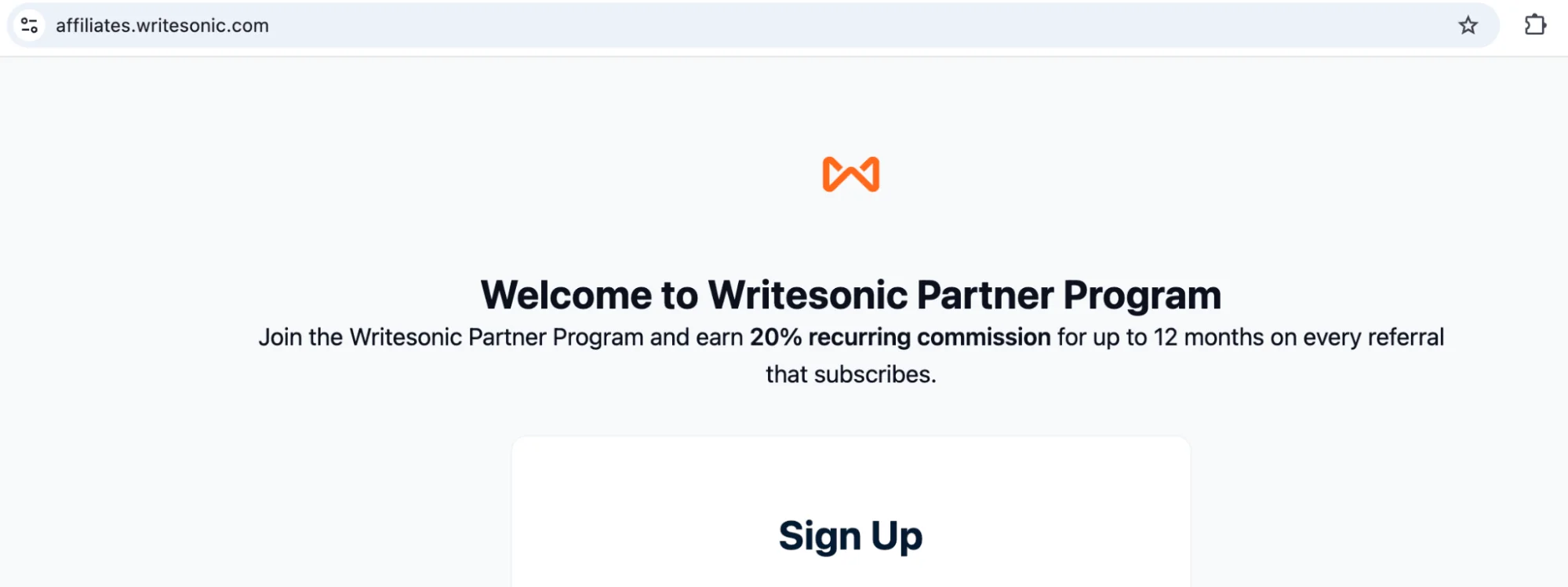
Writesonic combines AI writing, SEO, and marketing tools under one platform.
- Commission: 20% recurring for up to 12 months
- Cookie: 30 days
- Best for: SEO, blogging, and digital marketing traffic
Note: Compared to some of its competitors, Writesonic publicly specifies its cookie duration, giving affiliates a clearer idea of how referrals are tracked.
Notion

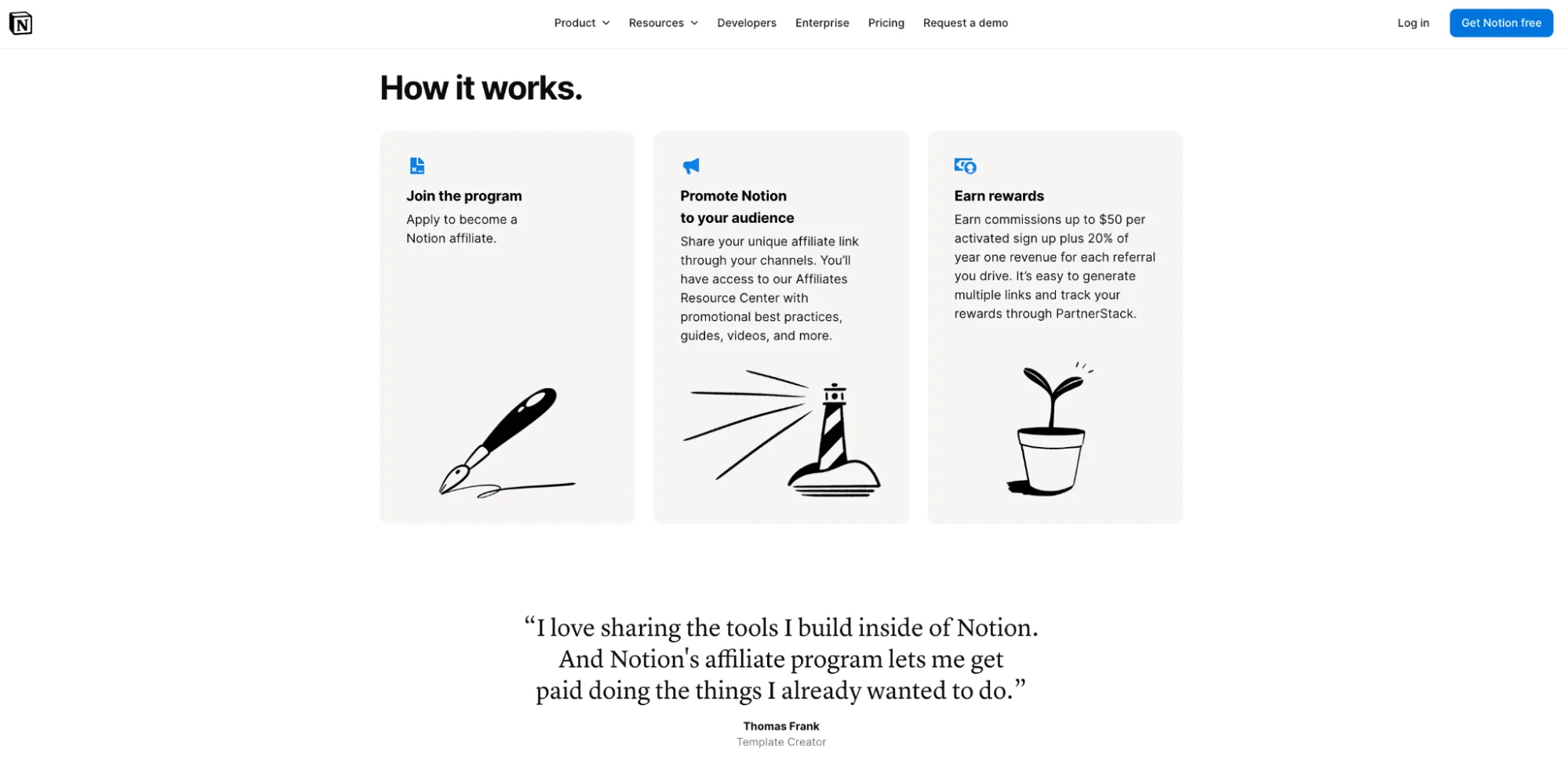
Unlike most AI SaaS affiliate programs, Notion uses a hybrid payout model.
- Commission: Up to $50 per activated sign-up plus 20% of first-year revenue
- Cookie: Not publicly specified
- Best for: Productivity, education, and business audiences
| Program | Commission | Cookie Duration | Payout Model |
| Jasper | 25% recurring for up to 12 months (30% for top partners) | Cookie duration set by affiliate platform | Recurring |
| ElevenLabs | 22% recurring for the first 12 months | (not publicly specified) | Recurring |
| Writesonic | 20% recurring for up to 12 months | 30 days | Recurring |
| Notion | Up to $50 per activated sign-up + 20% of first-year revenue | (not publicly specified) | Hybrid |
A quick comparison shows there’s no universal model for AI affiliate programs. Commission rates, payout structures, and even what counts as a qualified conversion can vary from one platform to another.
Pro Tip: Before promoting an offer, take the time to understand exactly how commissions are earned and when they’re paid.
Traffic Buyers Need to Think Beyond the First Conversion
Unlike impulse purchases or one-time affiliate offers, AI subscriptions require users to make an ongoing financial commitment.
This means that every month, they’re asking themselves the same question:
“Is this tool still worth paying for?”
Someone who actively searched for an AI writing assistant to solve a specific problem is more likely to become a paying customer than someone who clicked an ad out of curiosity. Likewise, users who understand how a tool fits into their daily workflow are generally more likely to renew their subscriptions than those who simply wanted to try the latest AI trend.
This changes how campaign performance should be evaluated from an affiliate’s point of view. A campaign that generates hundreds of free trials may still produce disappointing revenue if very few users convert into paying subscribers. On the other hand, a campaign with fewer sign-ups but stronger retention can become far more profitable over time.
How Traffic Sources Influence User Intent
The same person may encounter an AI product across different channels, yet their likelihood of subscribing (and more importantly, remaining a paying customer) changes depending on why they clicked in the first place.
The same AI product can attract very different users depending on where they first encounter it.
| Traffic Source | Typical User Mindset |
| Search | “I’m looking for the best AI tool for my needs.” |
| Social | “Interesting… I wonder what this tool does.” |
| Push | “Maybe I’ll try the free version.” |
| Native | “Can this actually solve my problem?” |
- Search traffic users often arrive with a specific problem they want to solve. They’re willing to spend more time comparing products, reading reviews, evaluating pricing plans, and looking for credibility signals before committing to a subscription. This high-intent mindset naturally aligns with AI SaaS products, where users are actively searching for tools that solve an ongoing problem rather than satisfy a one-time curiosity.
- Social traffic is all about discovery. Nobody’s actively hunting for an AI tool when they’re scrolling through videos or reading posts from creators they follow. That’s why the campaigns that actually work tend to show the product in action rather than rattling off a list of features. A quick demo, a before-and-after, a real example someone can relate to – these are the things that stop their scroll.
- Push traffic reaches users with timely messages that encourage them to discover a product or return to an offer they may find relevant. And in this vertical, that return matters: search gets the sign-up, but push gets the payment. When most subscription revenue is lost between the free trial and the first billing cycle, the message that arrives on day six of a seven-day trial is doing the work that decides the campaign.
- Native advertising sits somewhere between discovery and intent. Since native placements blend naturally with surrounding editorial content, users often encounter AI tools while researching solutions or exploring industry topics.
How User Intent Changes Across Traffic Sources
Search
“I’m looking for the best AI tool.”
Purchase Intent
Very High
Social
“Interesting… what does this tool do?”
Push
“I might try the free version.”
Purchase Intent
Medium–Low
Native
“Can this solve my problem?”
Key takeaway Different traffic sources introduce users at different stages of the buying journey. Subscription-based AI products often perform best when the campaign aligns with the user’s intent—not just the number of clicks.
Pro Tip: Since users often compare multiple AI tools before subscribing, front-end metrics such as CTR or free trial registrations don’t always reflect long-term campaign performance.
The Biggest Opportunities (and Biggest Myths) in AI SaaS Affiliate Marketing
With recurring commissions becoming increasingly common, it’s easy to see why AI affiliate programs have generated so much excitement. On paper, they seem to offer everything affiliates have been looking for: growing demand, recognizable brands, and the possibility of earning from the same customer month after month.
However, growing popularity has also created unrealistic expectations. Recurring commissions don’t automatically translate into recurring income, and not every AI product is built to retain customers over the long term.
Understanding the difference between genuine opportunities and common misconceptions can help you choose offers with stronger earning potential.
| Real Opportunities | Common Myths |
| Recurring commissions can create more predictable long-term revenue. | Every AI affiliate program offers recurring payouts. |
| AI adoption continues to create demand for new software. | AI products automatically retain customers. |
| Established brands often convert better because users already know and trust them. | More free trials automatically mean more profit. |
| Subscription businesses can generate higher customer lifetime value. | High commission rates always equal higher earnings. |
Not all AI products perform equally after the first conversion. As more marketers enter the niche, standing out becomes increasingly difficult, especially when promoting products that already have hundreds of active affiliates.
Some solve everyday problems and become part of a user’s routine (e.g., digital planners with in-built AI personal assistants), while others (e.g., a 28-day weight-loss course with a personal AI trainer) generate initial excitement but struggle to convince users to keep paying once the subscription renews.
For affiliates, this difference can have a direct impact on earnings. For example, an offer paying 20% recurring with strong customer retention may ultimately generate more revenue than an offer promising 40% commissions if most users cancel after the first month.
Andreessen Horowitz (whom we mentioned at the start of the article) also points out that many AI products experience noticeable churn during the first few months as users experiment with different tools. For that reason, retention from the third month onward can be a much stronger indicator of customer quality than sign-up volume alone.
How to Choose an AI Affiliate Program
Before investing your time or advertising budget, take a few minutes to ask yourself whether:
- The payout model matches your strategy
Some pay recurring commissions for as long as the customer stays subscribed, while others use CPA or hybrid models that combine fixed payouts with revenue sharing. Choose a model that fits the way you monetize traffic. If you’re buying traffic at scale, understanding when and how commissions are paid is just as important as the commission percentage itself.
- The product solves an ongoing problem
Writing assistants, coding copilots, meeting transcription software, and productivity tools often become part of a user’s daily workflow. Products built around one-off use cases or temporary trends may attract plenty of free trials but struggle to retain paying subscribers.
- Users experience value quickly
The sooner users understand why a product is useful, the more likely they are to continue using it. A simple onboarding process and clear product benefits can all improve the chances of converting a free user into a paying customer.
- This niche is competitive
Before launching a campaign, think about how you’ll differentiate your offer. Your traffic source, creative approach, and audience targeting can make just as much difference as the product itself.
- You can realistically promote this offer
Before joining a program, think about whether it’s a good fit for your audience and traffic source. The easier it is to match the offer to the right users, the better your chances of building a profitable campaign.
The payout model fits my monetization strategy.
The product solves a real, recurring problem.
Users can quickly understand the product’s value.
I understand the level of competition.
I’m evaluating more than just the commission rate.
The offer matches my audience and traffic source.
Final Check
If you answered “Yes” to most of these questions, the offer is likely worth testing.
If several boxes remain unchecked, compare a few more programs before investing your advertising budget.
Frequently Asked Questions about AI SaaS Offers
Which payout model performs best?
There is no universal answer. Some affiliates prefer recurring commissions because they create predictable long-term revenue, while others choose CPA or hybrid models for faster cash flow. The best option depends on your traffic source, your budget, and your campaign goals.
Which traffic sources usually convert best?
Different traffic sources attract users with different levels of intent. Search traffic often reaches users actively looking for a solution, while social, native, and push can be effective when campaigns match the right audience and creative. Rather than looking for a single “best” traffic source, focus on finding the right fit for the product you’re promoting.
What’s the biggest mistake affiliates make when promoting AI SaaS offers?
Many affiliates focus almost entirely on commission rates without considering customer retention. A generous payout doesn’t necessarily mean higher long-term earnings if users cancel their subscriptions after the first billing cycle.
Are recurring commissions always better than CPA?
Not necessarily. Recurring commissions can generate higher lifetime earnings, but they usually take longer to accumulate. CPA models may produce faster returns, especially for affiliates buying traffic with limited budgets.
Which AI SaaS niches have the strongest long-term potential?
Products that solve recurring problems (such as AI writing assistants, coding tools, productivity software, meeting assistants, and business automation platforms) often have stronger retention than tools users try once out of curiosity.
Final Verdict
AI SaaS affiliate programs don’t require a completely different affiliate strategy, but they do change how you evaluate campaigns. A strong offer isn’t defined only by its commission rate. Product quality, customer retention, and user intent all influence whether a campaign generates recurring revenue over time.
For affiliates, choosing the right AI SaaS program means looking beyond the first conversion and focusing on products that people continue using long after the free trial ends. If an offer solves a real problem and fits the audience you’ll bring, chances are that you’ll be a great match!
Come join us on Telegram for more insights and communications with fellow-affiliates!




.png)
.png)

.png)


 English (US) ·